
Mobile Legends: Adventure-idle
Skystone Games Pte. Ltd.Role Playing
4.0307.00 Reviews
- Version
- 1.1.684
- Installs
- 10.00K
- Age Rating
- Teen
Screenshots





Our Review of Mobile Legends: Adventure-idle
 Analysis by Appyee
I approached Mobile Legends: Adventure-idle expecting a relaxed role-playing game built around collecting heroes and letting battles run with limited supervision. That expectation is broadly accurate, but it misses the part that kept me interested: the game is less about constant tapping and more about making sensible choices before stepping away. My best sessions were not the ones where I watched every fight. They were the ones where I adjusted my lineup, spent resources carefully, and accepted that a stronger-looking team is not always the most useful one.
Developed by Skystone Games Pte. Ltd., this free mobile RPG is aimed at players who enjoy gradual progress, character collection, and short check-ins rather than long, uninterrupted play sessions. It is available for Android devices running at least Android 6.0, carries a Teen content rating, and includes optional purchases ranging from $0.99 to $99.99 per item. The current version is 1.1.684, and the game was released on March 22, 2025.
The public response is still relatively modest in size, with an average rating of 4.0 from around 500 ratings and more than 300 written reviews. It has passed 10K installs, which makes it feel like a smaller, newer choice beside the enormous names in mobile role-playing. That can be a positive if you prefer trying something before it becomes familiar to everyone, though it also means the long-term community momentum is harder to judge.
Where the real decisions begin
The central decision is not simply which hero looks strongest. It is how much attention I want to give the game and how I want to turn limited progress into a lineup that can handle the next obstacle. The idle rewards make it possible to leave the game alone and return later, but the reward of coming back depends on what I did before leaving. A poorly planned team can make the same waiting period feel unproductive, while a sensible setup turns that pause into useful preparation.
I found it helpful to separate three questions whenever I changed my lineup. First, which heroes can actually advance the current stage? Second, which characters are worth developing for more than one situation? Third, am I spending resources to solve a temporary problem or to improve the team over several sessions? That last question matters because idle games can tempt you into making quick upgrades simply because the button is available.
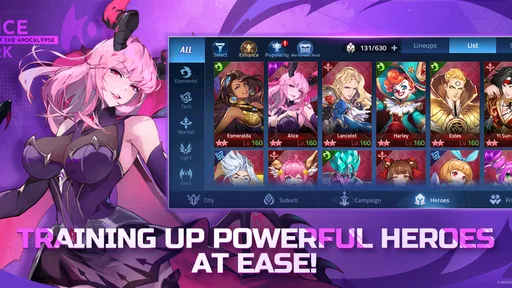
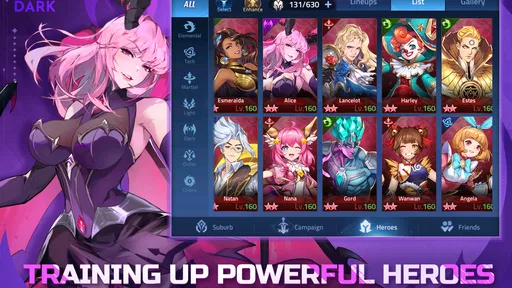
The collection structure gives the game its role-playing identity, but collecting alone is not the strategy. A large roster can create flexibility, yet spreading attention across too many characters can leave the main group underdeveloped. I preferred building a dependable core and changing one or two positions when a stage exposed a weakness. This approach reduced wasted investment and made each failed attempt more informative.
That is also where the game differs from a more active action RPG. In a hands-on game, I can often compensate for a weak character with timing, movement, or quick reactions. Here, preparation carries more weight. If the lineup is wrong, watching the battle more closely rarely fixes the underlying issue. The important work happens before the fight, when I decide what kind of answer the team needs.
Planning around short and long sessions
For a quick break, the game works well as a check-in routine. I can collect idle progress, review the current obstacle, make a small adjustment, and leave again. For a longer session, I have more reason to compare several possible lineups instead of repeatedly pressing forward with the same arrangement. This makes it suitable for someone who wants a game that fits around commuting, waiting, or a few spare minutes at home.
A realistic everyday use case is a player who checks in before work, claims accumulated rewards, upgrades one useful part of the team, and sets the lineup for the next stretch. Later, during a lunch break, that player can see whether the change helped and decide whether to continue pushing or return to resource gathering. The game supports that rhythm better than a title that demands a long uninterrupted battle session.
There is a trade-off, though. If you want every minute of play to contain direct input, this design may feel passive. The game asks you to enjoy planning, collection, and gradual improvement. It does not offer the same satisfaction as controlling a character through a difficult encounter yourself. I would recommend it to someone who likes making a decision and then checking the result, not to someone who wants constant mechanical control.
Why lineup changes matter more than blind upgrading
One of the more useful habits I developed was changing the team only after identifying the actual reason for a loss. If the group collapses too quickly, adding more general power may not address the problem. If the team survives but cannot finish efficiently, a different balance may be more valuable than simply strengthening the front line. The game rewards this kind of diagnosis because its idle structure makes repeated attempts easy, but resources are still better spent with a purpose.
I also recommend keeping a clear distinction between a temporary experiment and a permanent investment. Trying a different hero can reveal that the current obstacle is a lineup problem rather than a power problem. However, developing every promising character at once can dilute progress. My rule was simple: test broadly when the cost is low, then concentrate resources once a role proves useful.
This is a small but meaningful strategic layer. The store summary emphasizes collecting rewards and building a unique lineup, but the practical lesson is that uniqueness should serve a plan. A team assembled only from favorites may be enjoyable, yet it may not be the most efficient route through a difficult stretch. Conversely, a perfectly practical lineup can become dull if it removes the personal choices that make collection worthwhile.
Risk, reward, and the cost of impatience
Idle rewards create a steady sense of progress, but they also make impatience easy to recognize. When I wanted to advance immediately, the tempting response was to spend resources on whatever upgrade was closest. That can provide a short-term lift, but it may leave the team less prepared for the next type of challenge. The better decision is often to wait, gather more, and make one meaningful improvement instead of several scattered ones.
The free entry point is important here. You can begin without paying, which makes it easier to discover whether the slow-burn structure suits you. Optional purchases are present, with individual items priced from $0.99 to $99.99. That wide range is a reason to decide on a personal spending limit before the collection loop becomes emotionally persuasive. I would treat purchases as convenience or acceleration, not as a requirement for deciding whether the basic game is enjoyable.
My strongest advice is to avoid paying simply because a stage has stopped moving. A wall can be useful information. It may show that the current team needs a different arrangement, that resources should be concentrated, or that the right choice is to let idle progress accumulate. Spending immediately can hide the strategic lesson and turn a manageable pause into a habit of buying through uncertainty.
There is also a planning horizon to consider. A decision that helps for the next battle may be weaker than one that remains useful across many stages. When choosing where to focus, I favored characters and improvements that supported the overall shape of the lineup rather than solving one narrow problem. That does not mean every choice must be permanent; it means temporary fixes should be recognized as temporary before resources are committed.
How I handled failed attempts
A failed attempt is most valuable when I changed one variable afterward. Replacing several heroes at once makes it hard to know what worked. Swapping one position, testing the result, and then deciding whether to make a second change gave me a clearer sense of the team’s needs. This method is slower than random experimentation, but it saves resources and makes the game feel more like a planning exercise than a guessing game.
I also learned not to judge a hero solely by how impressive the character appears in isolation. In a collection RPG, a character’s value depends on what the rest of the lineup is doing. A hero that seems ordinary may become useful when the team lacks a particular kind of support, durability, or finishing power. Since the game’s appeal comes from building a personal group, it is worth testing combinations instead of automatically chasing the most obvious individual upgrade.
The risk is that the game can feel repetitive when the answer to a problem is simply more waiting. That is the main friction in the idle format. Planning gives the pauses meaning, but it cannot remove the pauses entirely. Players who dislike delayed progress may see the same system as a barrier rather than a reward.
Adapting instead of forcing one perfect team
I enjoyed the game more after abandoning the idea that one lineup should solve everything. A flexible roster is more useful than a single favorite arrangement, especially when a stage exposes a weakness the current team cannot cover. Adaptation does not require rebuilding from scratch each time. In practice, it means keeping a reliable foundation while reserving a few slots for targeted changes.
This is where the game’s role-playing structure becomes more interesting than a simple automatic battler. The battles may run with limited input, but the surrounding decisions still ask me to interpret results. A loss can suggest that the team lacks endurance, that its damage is arriving too slowly, or that its balance is unsuitable for the current obstacle. The game gives me a reason to think about those possibilities even when I am not controlling individual actions.
For new players, I would suggest resisting the urge to develop every newly acquired hero immediately. Keep notes mentally about who has already proven useful, who fills a missing role, and who is only being tested. This is especially helpful when the roster begins to feel larger than the resources available. A smaller, coherent group usually gives clearer progress than a wide collection of half-developed options.
For returning players, the most efficient check-in is not necessarily the longest one. Collecting rewards, reviewing the current roadblock, and making one deliberate adjustment can be enough. If the next attempt still fails, leaving the game to build resources may be more sensible than repeatedly replaying the same obstacle. That workflow makes the idle feature feel intentional rather than like a substitute for content.
Who will appreciate this flexibility
I think the game is a good fit for players who enjoy character collection but do not want a demanding action game. It suits people who like checking progress several times a day, making formation decisions, and watching a team gradually become more capable. It may also work for someone returning to mobile RPGs after finding traditional games too time-consuming.
I would be more cautious recommending it to players who want a story-heavy role-playing experience, deep manual combat, or a completely hands-off game with no strategic involvement. The first group may prefer a narrative RPG where characters and dialogue carry the experience. The second may be happier with a real-time combat title. The third may find even the lineup decisions more involvement than they want.
It is also not the best choice for anyone who feels uncomfortable around optional purchases that can accelerate progress. The free starting point is welcoming, but the presence of items priced as high as $99.99 means self-control matters. A different game with a simpler purchase structure may be a better fit if spending pressure would reduce your enjoyment.
Depth over time and the value of a slower game
The long-term appeal depends on whether gradual improvement feels satisfying to you. I found the early loop easy to understand: collect progress, strengthen the roster, adjust the lineup, and try to move forward. The deeper question is whether that loop continues to offer meaningful decisions after the initial excitement of collecting new heroes fades.
For me, the answer is yes, but with limits. The game has enough room for planning because progress is not only about pressing an upgrade button. The lineup has to be considered as a group, and the player has to decide when to push, when to wait, and when to redirect resources. Still, the idle structure naturally reduces moment-to-moment variety. If you need every session to introduce a new mechanic or a dramatic challenge, the routine may eventually feel narrow.
The current version, 1.1.684, gives the game a concrete point of entry for new players, but I would approach it as a developing mobile RPG rather than a finished substitute for every major title in the genre. Its install base is over 10K, so it has attracted an initial audience, while its rating and review volume suggest a smaller public footprint than the established alternatives. That makes personal preference especially important: try it because the loop appeals to you, not because it is already a dominant community game.
Compared with a conventional turn-based RPG, this game asks for less direct battle management and more patience between decisions. Compared with a fully automatic collection game, it gives the player a clearer reason to think about lineup composition and resource direction. Compared with an action RPG, it sacrifices control and immediate excitement in exchange for convenience. Those are not flaws by themselves; they define the audience.
Small routines that improve the experience
I found three routines particularly useful. First, I made a change only when I could explain what problem it was meant to solve. Second, I protected the main team from unnecessary experimentation by testing alternatives carefully. Third, I treated idle rewards as part of the plan rather than as a consolation prize after failing.
Another useful habit is to stop playing at a sensible point. If the next upgrade requires more waiting, there is little value in forcing repeated attempts with the same setup. Leaving after a deliberate adjustment turns the next return into a test of that decision. It also prevents the game from becoming a cycle of frustration followed by impulsive spending.
These habits are not complicated, but they change the feel of the game. Without them, the experience can become a sequence of automatic fights and disconnected upgrades. With them, even a short session has a beginning, a decision, and a result. That structure is the main reason I kept coming back.
My strategy verdict
Mobile Legends: Adventure-idle is a thoughtful choice for players who want a free role-playing game built around collection, idle progress, and lineup planning rather than constant control. I like that its best decisions happen before the battle: deciding which heroes deserve attention, whether to push or wait, and how to adapt without wasting the whole roster.
Its limitations are equally clear. The action can feel passive, progress may require patience, and optional purchases create a reason to set boundaries early. The game will not replace a manual combat RPG for someone who wants timing and direct control. It may also lose appeal if you need continuous novelty instead of a repeatable check-in routine.
For me, the strongest way to play is to treat it as a planning game with an idle engine, not as a battle game that happens to run automatically. Build a stable core, change one thing at a time, save resources for decisions with lasting value, and let waiting work in your favor. If that rhythm sounds relaxing rather than restrictive, this smaller mobile RPG is worth trying. If you want immediate action or a story-led adventure, I would look elsewhere.
Overall, Skystone Games Pte. Ltd. has created an accessible entry in the role-playing category that rewards calm experimentation. I would recommend it to a friend who enjoys collecting heroes and checking progress throughout the day, provided that friend is comfortable with slower advancement and optional spending. Its real strength is not the promise of effortless progress; it is the quiet satisfaction of returning later and discovering that a well-planned lineup has done its job.
Verdict
Strengths of Mobile Legends: Adventure-idle
- Simple idle progression makes it easy to play in short sessions.
- Large roster of heroes offers plenty of team-building options.
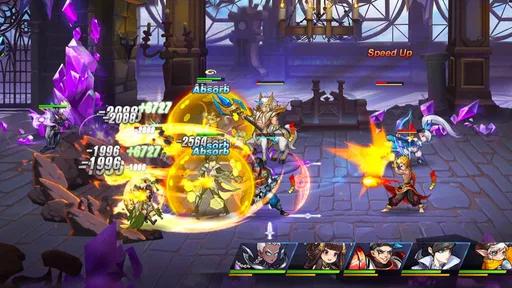
- Auto-battle helps reduce the need for constant manual input.
- Frequent events provide extra rewards and limited-time challenges.
- Anime-inspired visuals and effects look polished on modern devices.
Limitations of Mobile Legends: Adventure-idle
- Progress can slow considerably without regular resource collection.
- Duplicate heroes are often needed to unlock their full potential.
- Many rewards and menus can feel overwhelming for new players.
- Competitive modes may favor players who spend money on premium items.
- The game requires an internet connection for most features.
Other Releases by Skystone Games Pte. Ltd.
View All
Crystal of Atlan
Action4.3

Mobile Legends: Bang Bang.US
Action3.5

ACECRAFT: Sky Hero
Action4.6

Watcher of Realms - US
Role Playing4.5
Similar Picks in This Category
View All
Hair Dye
CrazyLabs LTD4.4

Monster High™ Beauty Salon
CrazyLabs LTD4.5

Bus Simulator - Bus Games 3D
Jima Apps4.4

Flight Pilot: 3D Simulator
Wildlife Studios4.1


Super Stylist Fashion Makeover
CrazyLabs LTD4.4
Frequently Asked Questions
What is Mobile Legends: Adventure-idle?
Mobile Legends: Adventure-idle is an idle role-playing game set in the Mobile Legends universe. You collect familiar heroes, build teams, improve their equipment and abilities, and send them into turn-based battles. Progress continues even when you are offline, making it suitable for players who want a lighter experience than a constantly active multiplayer game.
Does Mobile Legends: Adventure-idle require an internet connection?
An internet connection is generally needed for important features such as account synchronization, events, updates, advertisements, cloud-based progress, and online rewards. Some menus or previously loaded content may remain accessible briefly without a connection, but the game is designed to be played online. A stable connection is recommended to prevent lost progress or interrupted battles.
Is Mobile Legends: Adventure-idle free to download and play?
Yes, the game can be downloaded and played for free, but it includes optional in-app purchases. These purchases may provide diamonds, summon resources, upgrade materials, battle passes, or limited-time bundles. Free players can still progress by completing daily activities and events, although collecting the strongest heroes and upgrading quickly may require more time than spending players.
Is Mobile Legends: Adventure-idle suitable for beginners?
The game is fairly beginner-friendly because its early stages provide tutorials, free summons, upgrade materials, and simple team-building guidance. Battles are mostly automated, so new players can focus on choosing heroes and improving formations. However, the number of currencies, upgrade systems, factions, and event menus can feel confusing at first, so careful resource management becomes increasingly important.
What devices can run Mobile Legends: Adventure-idle smoothly?
Mobile Legends: Adventure-idle is designed for Android and iOS devices, but performance depends on the phone or tablet’s operating system, available storage, memory, and processor. Older devices may experience longer loading times, heat, or occasional stuttering, especially during busy effects or extended sessions. Before downloading, check the current store requirements and keep enough free space for updates.
Play our best games!


